Understand Cash Buyers vs. Wholesalers First
If you’re thinking about selling your house quickly, you’ve probably seen plenty of advertisements promising cash offers, fast closings, and hassle-free sales.
Maybe you’ve received postcards in the mail, phone calls, text messages, or seen signs around Pasco County or Hernando County that simply say, “We Buy Houses.”
What many homeowners don’t realize is that not every company making those promises operates the same way.
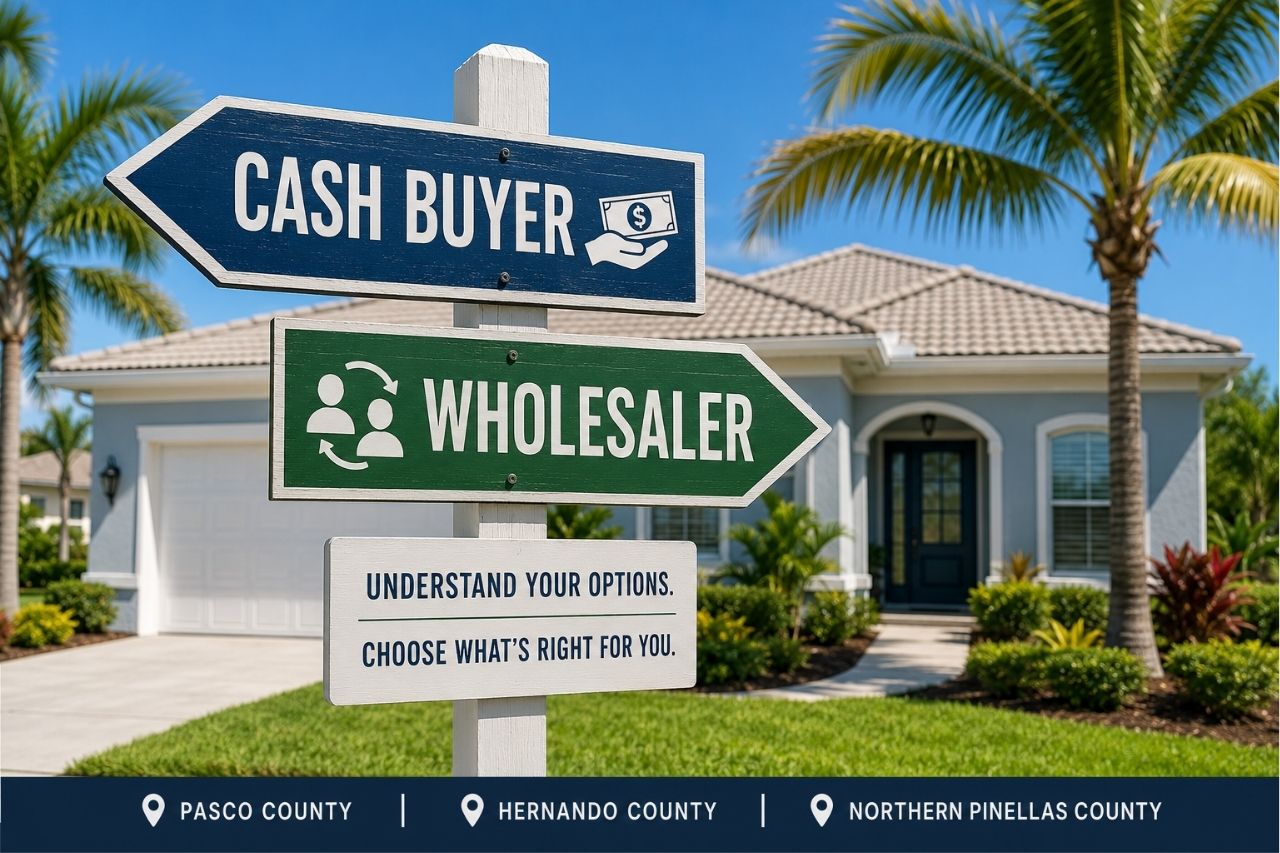
Some companies are true cash buyers who intend to purchase your home themselves. Others are real estate wholesalers who put your home under contract while looking for another investor to complete the purchase.
Neither approach is automatically better or worse. The important thing is understanding the difference before you sign a contract.
The more you understand about how each works, the better prepared you’ll be to choose the selling option that fits your situation.
What Is a Cash Buyer?
A cash buyer is exactly what the name suggests.
They are purchasing your home themselves.
Rather than relying on a traditional mortgage, they use available cash or established investment financing to complete the purchase.
Once you accept their offer, they fully intend to become the new owner of the property.
Cash buyers commonly include:
- Local real estate investors
- Rental property owners
- House flippers
- Professional investment companies
Because they’re buying the property themselves, the process is often straightforward.
After evaluating your home and agreeing on a price, they schedule the closing and purchase the property.
What Is a Real Estate Wholesaler?
A wholesaler operates differently.
Instead of buying your home for themselves, a wholesaler typically places your property under contract and then markets that contract to another investor.
This is known as an assignment of contract.
Rather than making money by owning the property, wholesalers earn a fee by connecting homeowners with investors willing to purchase the contract.
In simple terms:
A cash buyer buys your house.
A wholesaler sells the contract.
How Does Wholesaling Work?
A typical wholesale transaction looks like this:
- The wholesaler agrees to purchase your home.
- You sign a purchase agreement.
- The wholesaler markets the contract to investors.
- Another investor agrees to purchase the contract.
- That investor completes the closing and becomes the new owner.
If everything goes as planned, the sale closes successfully.
If the wholesaler can’t find another buyer, the closing may be delayed or the contract could be canceled, depending on the terms of your agreement.
That’s why it’s important to understand exactly who you’re doing business with before signing anything.
Cash Buyer vs. Wholesaler: What’s the Difference?
| Cash Buyer | Wholesaler |
|---|---|
| Purchases your home directly | Markets the purchase contract to another investor |
| Intends to become the property’s owner | Usually never owns the property |
| Typically has funds available to close | May need to locate another buyer first |
| Generally offers greater certainty | Closing may depend on finding an investor |
This doesn’t mean one option is always better.
It simply means the process is different, and homeowners deserve to understand how it works.
Are Wholesalers Legitimate?
Yes.
Wholesaling is a legitimate real estate business model in many states, including Florida, when conducted in compliance with applicable laws.
Some wholesalers have extensive investor networks and successfully close transactions every week.
Others may have very little experience and hope to find a buyer only after your property is already under contract.
The difference matters.
As a homeowner, it’s perfectly reasonable to ask whether the person making the offer intends to purchase your home or plans to assign the contract to someone else.
Why Some Homeowners Become Frustrated
Most frustrations don’t come from wholesaling itself.
They come from unrealistic expectations or poor communication.
For example, a wholesaler might:
- Offer more than investors are ultimately willing to pay.
- Promise a quick closing before securing another buyer.
- Request multiple contract extensions.
- Cancel the agreement if no investor is found.
From a homeowner’s perspective, that can mean losing valuable time while your home is tied up under contract.
That’s why asking questions upfront is so important.
Ask About the Earnest Money Deposit
Another question that’s worth asking is how much earnest money the buyer is putting down.
Earnest money is a deposit made when the contract is signed to demonstrate the buyer’s commitment.
While the amount varies from one transaction to another, a meaningful deposit often shows the buyer has confidence in completing the purchase.
A very small deposit doesn’t necessarily mean someone isn’t legitimate, but it should encourage you to ask additional questions about how the transaction will work and what happens if they don’t close.
Questions Every Homeowner Should Ask
Whether you’re talking with a cash buyer or a wholesaler, don’t hesitate to ask questions like:
- Are you purchasing my home yourself?
- Will your company be listed as the buyer on the closing documents?
- Is this contract assignable?
- Can you provide proof of funds?
- Have you purchased homes in this area before?
- What happens if you’re unable to close?
- Under what circumstances can you cancel the contract?
- How much earnest money are you putting down?
A reputable buyer should be willing to answer these questions openly.
Why Investors and Wholesalers Often Work Together
Wholesalers and investors aren’t necessarily competitors.
In many cases, they work together.
Wholesalers spend time finding off-market opportunities.
Investors purchase the properties.
When everyone understands their role and communicates honestly, this arrangement can benefit all parties involved.
Which Option Is Better?
There isn’t one answer that fits every homeowner.
If you’re working with an experienced wholesaler who has a strong network of investors, your transaction may go smoothly.
If you’re working directly with a cash buyer who intends to purchase your home, you may have greater certainty about who is actually buying the property.
The important thing isn’t choosing between a wholesaler and an investor.
It’s understanding who you’re working with, how the transaction will be completed, and what happens if things don’t go exactly as planned.
How I Help Homeowners Compare Their Options
When homeowners ask me about selling quickly, I don’t start by recommending a cash sale.
I start by learning about their situation.
Every seller has different priorities.
Some want to sell as quickly as possible.
Some want to avoid making repairs.
Others are trying to maximize their sale price, even if it takes a little longer.
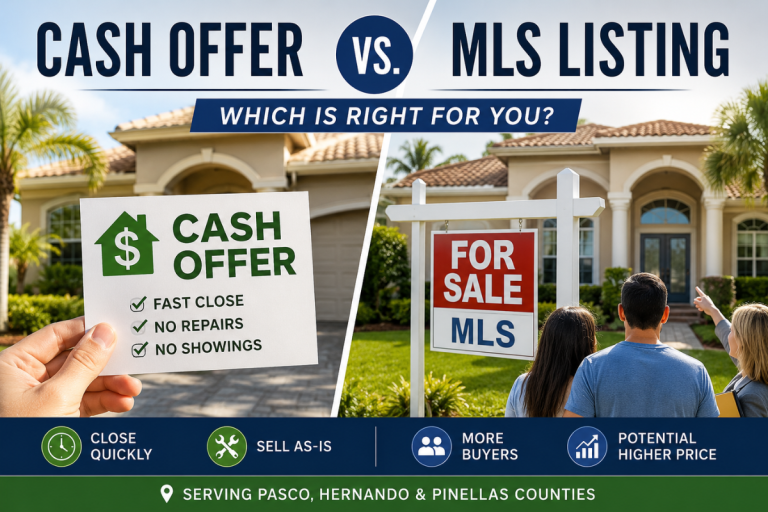
If your home is likely to qualify for traditional financing and selling on the MLS could put significantly more money in your pocket, I want you to understand that option.
If speed, convenience, or selling as-is is more important, we can also look at legitimate local cash buyers I’ve built relationships with over the years. These investors purchase properties themselves—they aren’t simply advertising for homes while hoping to find another buyer later.
My goal has never been to push homeowners toward one solution.
My goal is to help you understand every legitimate option so you can choose the one that best fits your timeline, your home’s condition, and your financial goals.
Frequently Asked Questions
Is every company that advertises “We Buy Houses” a cash buyer?
No. Some companies purchase homes directly, while others operate as wholesalers and assign purchase contracts to investors.
Is wholesaling legal in Florida?
Yes, when conducted in compliance with Florida law. If you’re unsure about the terms of a contract, it’s always a good idea to ask questions before signing.
How can I tell if someone is a wholesaler?
Ask whether they intend to purchase the property themselves, whether the contract is assignable, and whether they can provide proof of funds.
Are wholesalers bad?
Not at all. Many wholesalers operate professionally and provide a valuable service. The key is understanding how the transaction works before agreeing to sell.
Are cash offers usually lower than MLS prices?
In many cases, yes. Investors typically factor in repair costs, holding expenses, market risk, and the profit they hope to earn. If your home is in good condition and likely to qualify for traditional financing, listing on the MLS may result in a higher sale price.
Should I accept a cash offer or list my home?
It depends on your goals. If maximizing your sale price is your priority, listing on the MLS may be the better choice. If you need speed, convenience, or want to sell as-is, a direct cash sale could make more sense. The best option depends on your specific situation.
Need to Sell Your Home Fast?
I can help you get a no-obligation cash offer and compare it to selling on the MLS. Together, we’ll review all of your options so you can choose the approach that best fits your goals, timeline, and home.
Explore your options for selling your home fast →
Need to Sell Fast? Need a Cash Offer?
Get a no-obligation cash offer and find out whether selling to an investor or listing on the MLS will put more money in your pocket.
There’s no pressure and no obligation—just honest advice so you can make an informed decision.
Lets get started now.
Helpful Resources
- When Is a Cash Offer Better Than Listing on the MLS? — Learn when a direct cash sale may be the better choice.
- Investor vs Realtor in Pasco and Hernando Counties — Compare two very different approaches to selling a home.
- Sell Your House As-Is in Pasco County — Understand what to expect when selling without making repairs.
- My Home Selling Options Explained — Explore the different ways I help homeowners sell based on their goals.