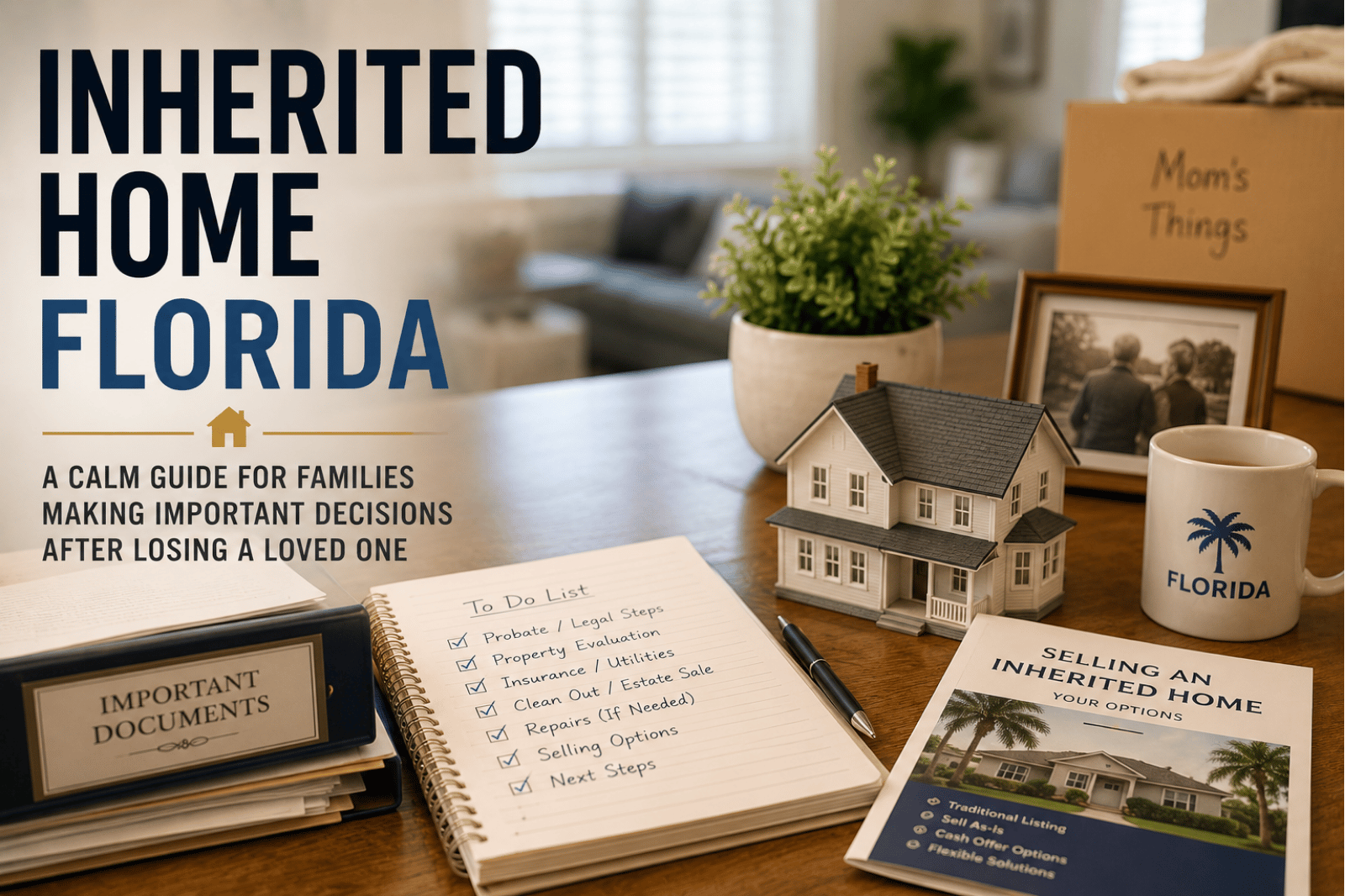
Inherited Home in Florida: What to Do First
Inheriting a home in Florida can feel overwhelming, especially when it happens after the loss of a parent or loved one.
For many families, this is not just about real estate. It is about grief, family memories, paperwork, family conversations, and trying to make important decisions while emotions are still fresh.
I talk with families in New Port Richey, Trinity, Spring Hill, Hudson, Port Richey, and throughout Pasco and Hernando Counties who suddenly find themselves responsible for a property they never expected to manage. Some live nearby. Others are trying to handle everything from another state while juggling work, travel, and family responsibilities.
One of the first things I tell people is simple:
You do not have to figure everything out immediately.
An inherited home in Florida usually comes with several moving parts. There may be probate questions, insurance concerns, cleanout decisions, maintenance issues, repairs, family disagreements, and eventually the question of whether to keep, rent, or sell the property.
The process becomes much easier when you slow it down and take it one step at a time.
What Should I Do First After Inheriting a Home in Florida?
Secure the Property and Make Sure It Is Being Maintained
Before making big decisions about the house, I recommend starting with the basics.
If the home is vacant, make sure the property is secure. Check the doors, windows, locks, garage access, and exterior openings. If multiple people had keys, rekeying the home may be worth considering for peace of mind.
You also want to make sure utilities and basic maintenance are being handled properly. In Florida, vacant homes can develop problems quickly, especially during the summer or storm season. Air conditioning issues, humidity, roof leaks, plumbing problems, and overgrown landscaping can all become expensive if nobody is paying attention.
Some of the first things I would check include:
- Whether the home is locked and secure
- Whether insurance coverage is still active
- Whether lawn and exterior maintenance are being handled
- Whether someone is checking or forwarding the mail
- Whether there are signs of leaks, mold, pests, or storm damage
If the property is in an HOA community in Trinity, a 55+ neighborhood in New Port Richey, or a deed-restricted community elsewhere in Pasco County, staying on top of basic maintenance may also help prevent violation notices and unnecessary fees.
What Documents Do I Need for an Inherited House?
Start Gathering the Property and Estate Paperwork Early
Once the home is secure, I recommend getting organized.
Try to locate the documents connected to both the property and the estate. These may include the will, trust documents, deed, mortgage information, insurance policies, property tax records, HOA documents, utility bills, and repair or warranty records.
This part is not exciting, but it matters.
Without clear paperwork, seemingly simple questions can cause delays. Is there still a mortgage? Are the property taxes current? Who has authority to make decisions? Are there liens or unpaid HOA balances? Is the home insured correctly?
If several family members are involved, I usually suggest creating one shared place for the information. That could be a physical folder, a shared digital folder, or one family member designated to collect and organize documents.
Clear communication early can help prevent confusion later.
Do I Have to Go Through Probate to Sell an Inherited House in Florida?
Probate Depends on How the Property and Estate Were Set Up
Not every inherited home in Florida follows the same legal path.
Some properties may need to go through probate. Others may be held in a trust, have joint ownership, or qualify for a different legal process. The answer depends on how the property was titled and how the estate was established.
This is an area where a Florida probate attorney can be very helpful.
As a Realtor, I can help with the real estate side of the process, but the legal authority to sell the property needs to be clear before the home can be properly sold and closed.
I never want a family to get deep into preparing and marketing a property only to discover that a title or probate issue should have been addressed first.
Make Sure You Know Who Has Authority to Sell
Before making major selling decisions, determine who has the legal authority to act on behalf of the estate.
Getting that question answered early can make everything that follows much easier.
Do I Need to Clean Out an Inherited House Right Away?
No, and Rushing the Cleanout Can Create More Problems
One of the biggest mistakes I see families make is feeling like they have to do everything immediately.
I understand why that happens. Carrying costs start adding up. Siblings may have different opinions. The house may be sitting vacant. Everyone wants the situation resolved.
But moving too quickly can create new problems.
I have seen families clean out homes too aggressively and get rid of things that mattered to another family member. I have also seen people spend thousands of dollars making changes before they knew whether those changes would actually help the sale.
There is rarely only one right way to handle an inherited home.
A longtime family home in Spring Hill may need a completely different approach than a waterfront property in New Port Richey, a villa in Trinity, a manufactured home in Hudson, or a property in Port Richey that needs a major cleanout.
The right plan depends on the property, the family, the timeline, and the goal.
Should I Make Repairs Before Selling an Inherited House?
Not Every Inherited Home Needs to Be Renovated Before Selling
Before deciding what to repair, I like to look at the property objectively.
Many inherited homes in Pasco and Hernando Counties have been owned for decades. Some have been extremely well maintained. Others have deferred maintenance because the previous owner could no longer keep up with the property.
That does not mean the home cannot be sold. It means the selling strategy needs to match its condition.
Some of the questions I look at include:
- Is the roof near the end of its useful life?
- Are there plumbing, electrical, or HVAC concerns?
- Is there evidence of moisture, leaks, or mold?
- Is the home outdated but still functional?
- Does the property need a full cleanout?
- Are there safety issues that should be addressed?
- Would repairs likely produce a worthwhile return?
Sometimes Simple Preparation Is Enough
Families are often relieved when I explain that they may not need to remodel an inherited house before putting it on the market.
Cleaning, decluttering, yard work, and a few basic repairs may be enough to improve how the property shows.
In other situations, spending money on repairs may not make sense at all, and selling the property as-is may be the more practical option.
The key is figuring that out before spending the money.
Should I Keep, Rent, or Sell an Inherited House?
The Best Choice Depends on the Family’s Goals and Responsibilities
Once the legal questions and the condition of the property are clearer, the family can start considering the bigger decision:
Should you keep the house, rent it, or sell it?
There is no automatic answer.
Keeping the home may make sense when it has strong sentimental value, manageable carrying costs, or a clear use within the family.
Renting may make sense when the property is in suitable condition and the family is prepared to manage tenants, repairs, insurance, and ongoing expenses.
Selling may make more sense when the family does not want the responsibility, lives outside the area, needs to settle the estate, or wants to eliminate ongoing maintenance, insurance, taxes, and vacancy concerns.
Compare the Practical Options Alongside the Emotional Ones
What I try to do is help families look at the real options, not just the emotional ones.
A home can mean a great deal to a family and still be difficult or impractical to keep.
Recognizing that doesn’t erase the memories connected to the house. It simply helps the family make a decision that fits where they are now.
What Are My Options for Selling an Inherited Home in Florida?
You Can List Traditionally, Sell As-Is, or Consider a Cash Offer
If the family decides to sell, the next decision is how to sell.
Some inherited homes are good candidates for a traditional MLS listing with professional photography, strong marketing, and broad exposure to buyers.
Others may benefit from some light preparation before being listed.
Some properties make more sense to sell as-is. In certain situations, a cash offer may also be worth considering when speed, convenience, or the condition of the property is a bigger priority.
I don’t believe every inherited home should be handled the same way.
The selling strategy should consider:
- The condition of the property
- Local buyer demand
- The family’s timeline
- How much work the property needs
- The cost of continuing to hold the home
- Whether the heirs live locally or out of state
- How involved the family wants to be in preparing the property
A Good Selling Plan Answers the Difficult Questions Before Listing
Before putting an inherited home on the market, I want the family to understand the plan.
What should be cleaned out? What can stay? Are repairs worth doing? What price range is realistic? How will showings work? Who will sign the documents? How will multiple heirs communicate and make decisions?
The more clearly those questions are addressed upfront, the smoother the selling process usually becomes.
Can I Sell an Inherited Florida Home If I Live Out of State?
Yes, but Having a Reliable Local Point Person Makes the Process Easier
Many inherited home situations involve adult children or heirs who do not live in Florida.
That creates a different set of challenges.
You may not be able to stop by the property, meet contractors, check repairs, manage an estate sale, or open the door for vendors. Even relatively simple tasks become difficult when you’re trying to manage them from hundreds or thousands of miles away.
In these situations, families often need more than someone to put the house on the MLS.
They need a local point person.
Much of the Work Can Be Coordinated Locally
Depending on the situation, that may include coordinating cleanout companies, estate sales, contractors, handymen, lawn care, utility access, photography, inspections, paperwork, and remote closing details.
In many inherited home situations, selling the house itself is not the hardest part.
Managing everything around the house is what wears families down.
That is why communication matters so much. Families need updates, honest feedback, and someone who can explain what is happening without adding pressure or confusion.
Does an Inherited House Need to Be Perfect Before I Call a Realtor?
No, I Would Rather See the House Before You Spend Money or Start Apologizing for It
Families often apologize before I even see the property.
They tell me the house is cluttered. Repairs were postponed. They are embarrassed by the condition. They don’t know what the property is worth. Siblings disagree. Probate is confusing. They’re exhausted.
I understand.
An inherited home is rarely a perfect situation. It is usually a combination of grief, responsibility, family dynamics, property issues, and financial decisions.
My job is not to judge the house.
My job is to help you understand your options.
You Can Decide What to Do After You Understand the Options
Sometimes the best path is carefully preparing the home for the open market.
Sometimes selling as-is makes more sense.
Sometimes the right decision is to slow things down for a few weeks while the family gets organized.
The important thing is not to let pressure make the decision for you.
What Is the Best First Step When You’re Not Sure What to Do With an Inherited Home?
Start by Understanding the Property, the Estate, and Your Options
Selling a parent’s or loved one’s home can feel much heavier than a normal real estate transaction.
There are memories attached to the property. There may be family disagreements, legal questions, cleanout decisions, repairs, and financial pressure. It can feel like everything needs an answer at once.
It doesn’t.
I believe inherited home situations are easier to manage with patience, clear communication, and a practical step-by-step plan.
If you’re handling an inherited home in Pasco County, Hernando County, New Port Richey, Trinity, Spring Hill, Hudson, Port Richey, Odessa, or Land O’ Lakes, start by understanding where things stand before deciding where they need to go.
You don’t have to make rushed decisions before you’re ready.
The right guidance should reduce stress, explain the available options clearly, and help you choose the path that fits your family’s situation.
Selling a Parents or Inherited Home?
Inheriting a home comes with a lot of decisions. Whether you’re dealing with probate, considering a cash offer, preparing the property for sale, or simply trying to understand your options, I’m here to help you navigate the process with clear, honest guidance.
Explore my complete guide to selling an inherited home →
Need a FAST Cash offer? Learn more here →
Selling a Parents Home?
Get a professional estimate of your property’s current market value before deciding what to do next.
Helpful Resources
How to Sell an Inherited House in Pasco County – A helpful next step if the family has already decided selling is likely.
Should You Keep or Sell an Inherited Florida Property? – Useful for heirs who are still weighing their options.
How to Sell a House During Probate in Florida – Helpful when probate questions are part of the selling process.
Estate Sales & Clean-Outs: A Guide for Families – A good resource for families who need to empty or organize the home before selling.
Sell Your Florida Home Remotely – Helpful for out-of-state heirs managing the process from outside Florida.