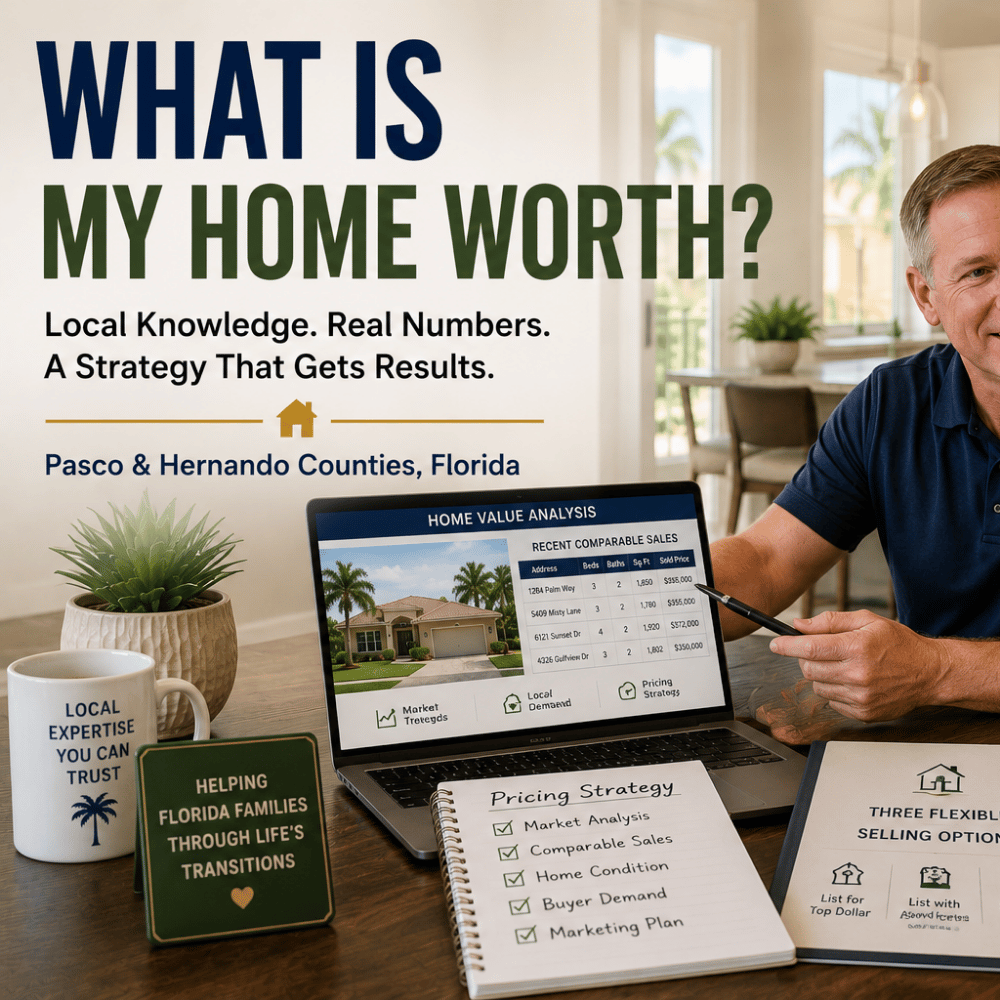
What Is My Home Worth? How I Actually Help Sellers Price Homes in Today’s Florida Market
One of the first questions almost every homeowner asks me is:
“What is my home worth?”
It sounds like a simple question, but the answer is much more involved than most people expect.
If you’re thinking about selling your home in New Port Richey, Trinity, Spring Hill, Hudson, Port Richey, Odessa, Land O’ Lakes, or elsewhere in Pasco, Hernando, or Pinellas County, understanding your home’s true market value is one of the most important steps you can take.
Many homeowners start by checking Zillow or another online home value estimator. Others hear what a neighbor’s house sold for or remember prices from a year or two ago. Some watch national real estate headlines and assume those trends apply to their neighborhood.
The problem is that none of those sources can tell the whole story.
A home’s market value isn’t determined by what a website estimates or what someone hopes to receive. It’s determined by how today’s buyers are responding to homes like yours in your local market.
That’s why I believe a home valuation should be based on real data, local knowledge, and a pricing strategy that fits your goals—not just a number pulled from a computer.
What Determines What My Home Is Worth?
Your Home’s Value Depends on More Than Recent Comparable Sales
People often assume pricing a home is as easy as finding three similar homes nearby and averaging the numbers.
If only it were that simple.
When I evaluate a property, I’m looking at much more than recent comparable sales. I also want to know how your home stacks up against the competition buyers are seeing today.
Some of the things I evaluate include:
- Recent sold properties
- Current active listings
- Pending sales
- Buyer demand
- Neighborhood trends
- Property condition
- Upgrades and renovations
- Lot size and location
- Floor plan appeal
- Age of the roof and major systems
- Flood zone and insurance considerations
- HOA requirements
- Overall market momentum
I’ve seen two homes on the same street sell for dramatically different prices simply because one showed better, had an updated roof, or needed fewer repairs.
That’s why pricing is part analysis and part understanding how buyers make decisions.
Why Does Pricing My Home Correctly Matter?
The Right Starting Price Can Affect Buyer Interest, Negotiations, and Your Final Sale
Pricing your home correctly from the beginning can have a significant impact on the entire selling process.
A well-priced home typically generates more interest early, attracts stronger buyer competition, and often gives sellers more negotiating leverage.
When a home is priced too high, the opposite can happen.
It may sit on the market longer, receive fewer showings, require price reductions, and eventually become a listing that buyers begin to overlook.
Ironically, trying to “leave room to negotiate” by pricing well above market value can sometimes reduce the final sales price instead of increasing it.
I’ve seen that happen more than once.
What Is One of the Biggest Home-Pricing Mistakes Sellers Make?
Pricing a Home Based on Emotion Instead of the Current Market Can Create Problems
One of the most common mistakes I encounter is homeowners pricing their property based on emotion instead of today’s market.
I completely understand why.
For many people, a home represents decades of memories, improvements, family milestones, and hard-earned equity.
It’s natural to feel that those things add value.
The challenge is that buyers don’t know your memories.
They’re comparing your home against every other property available today.
They’re looking at current listings, recent sales, monthly mortgage payments, insurance costs, interest rates, and what they believe offers the best overall value.
That’s why my job is to help bridge the gap between what a seller hopes for and how buyers are actually making decisions.
How Do I Determine What Your Home Is Worth?
I Look at Your Property, Your Goals, and the Current Market Before Recommending a Price
Every seller’s situation is different, so I don’t believe in using a one-size-fits-all pricing formula.
When we meet, my goal isn’t to throw out the highest number possible just to earn your business.
My goal is to develop a pricing strategy that gives you the best opportunity to reach your goals.
That starts with understanding both your property and your situation.
Step 1: I Walk Through Your Home
Before discussing price, I want to see the property in person.
During the walkthrough, I’m evaluating things buyers will notice immediately, along with factors that could influence value.
I’m looking at the home’s overall condition, improvements, deferred maintenance, layout, curb appeal, and any features that make it stand out—or hold it back.
I’ll also identify areas where small improvements could make a meaningful difference and let you know if there are repairs that probably aren’t worth the investment.
Many sellers are surprised to learn they don’t need an expensive renovation before listing.
Sometimes a little cleaning, fresh paint, improved lighting, or minor repairs are all that’s needed.
Other times, selling the property as-is may actually be the better option.
Step 2: I Learn What You Want From the Sale
Just as important as the home itself is understanding what you want to accomplish.
Some sellers are focused on getting the highest possible price. Others are more concerned about moving quickly. Some want the simplest process possible.
Others need help coordinating repairs, clean-outs, estate sales, or vendors.
I regularly work with homeowners who are:
- Downsizing
- Helping aging parents
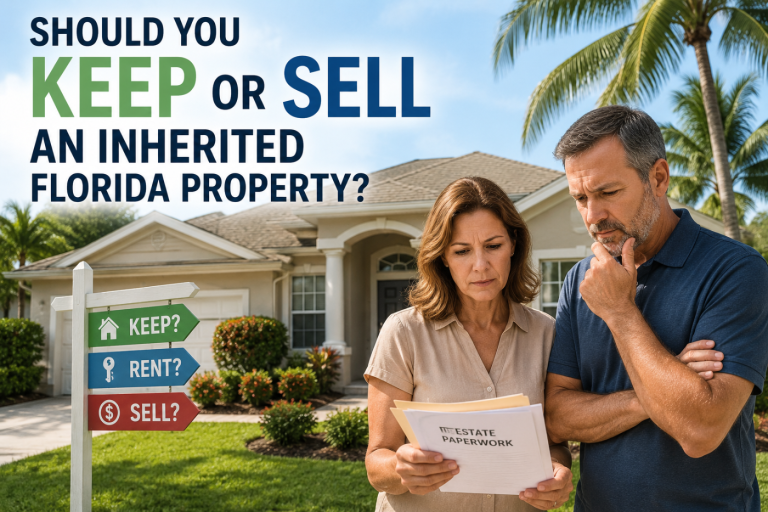
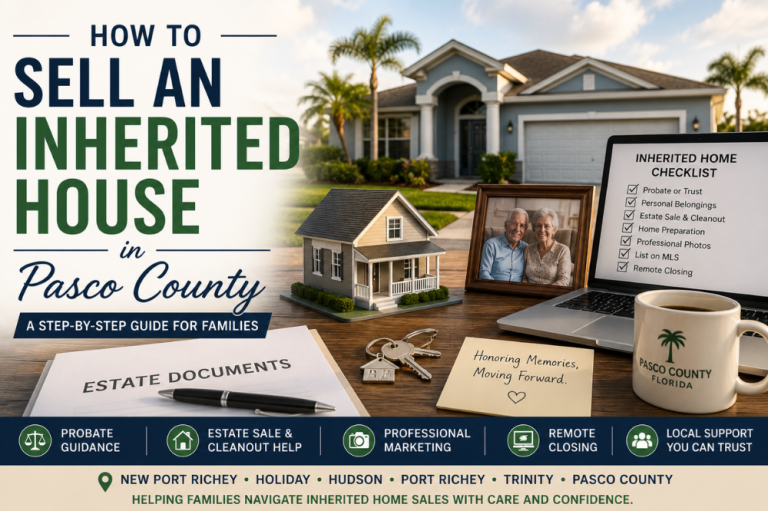
- Managing inherited property
- Selling during probate
- Relocating
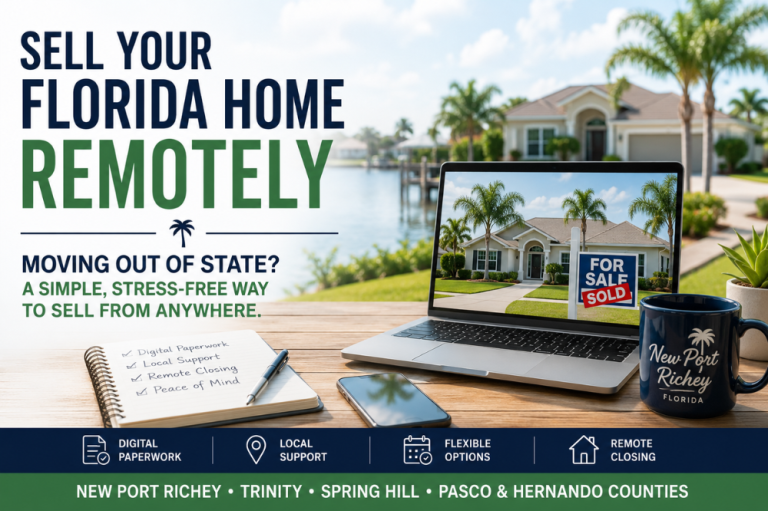
- Living out of state
- Transitioning into assisted living
Those situations can require very different approaches.
That’s why I spend time learning what’s important to you before we ever decide on a listing price.
Step 3: I Develop a Pricing Strategy Based on the Current Market
Once I understand both the property and your goals, I put together a pricing strategy based on current market conditions.
We’ll review:
- Comparable sales
- Active competition
- Buyer activity
- Market positioning
- A realistic value range
- Preparation recommendations
- Marketing strategy
Most importantly, I’ll explain why I believe buyers are likely to respond the way they will.
I don’t think pricing conversations should feel mysterious or full of vague promises.
I believe homeowners deserve honest guidance that helps them make confident decisions.
Should I Trust Zillow’s Estimate of My Home’s Value?
Online Home Value Estimates Can Be a Starting Point, but They Don’t Tell the Whole Story
This is another question I hear all the time.
Online estimates like Zillow can provide a general starting point, but they’re just that—a starting point.
Those algorithms can’t walk through your home.
They don’t know if you’ve remodeled your kitchen, replaced the roof, updated the flooring, or meticulously maintained the property for twenty years.
They also can’t fully account for factors like buyer preferences, neighborhood differences, insurance challenges, or subtle location changes that can significantly affect value.
In Florida, those differences matter.
One side of the street may be in a flood zone while the other isn’t. A 55+ community may behave very differently from a nearby neighborhood. Insurance costs, HOA restrictions, and even school boundaries can influence buyer demand.
That’s why I still believe local knowledge matters.
Is an Appraisal the Same as My Home’s Market Value?
An Appraisal and Market Value Can Be Similar, but They Aren’t Necessarily the Same
An appraisal is typically ordered by a lender to support a buyer’s financing.
Market value is what qualified buyers are actually willing to pay under current market conditions.
The two are often similar, but they aren’t always identical.
That’s another reason pricing shouldn’t rely on a single number or formula.
Should I Make Repairs or Improvements Before Selling?
Spending More Money on Your Home Before Selling Isn’t Always the Best Decision
One thing I enjoy most about working with sellers is helping them avoid unnecessary expenses.
I work with many seniors, estate representatives, inherited property owners, and out-of-state families who already have enough on their plate.
The last thing I want is for someone to spend thousands of dollars on updates that won’t provide a meaningful return.
Sometimes improvements absolutely make sense.
Other times, they’re unlikely to change buyer interest enough to justify the cost.
Part of my job is helping you decide:
- Which improvements are worthwhile
- Which repairs buyers are most likely to care about
- What can safely be left alone
- Whether selling as-is might actually be your best option
Every property is different.
That’s why I prefer having practical conversations instead of offering blanket advice.
Is Knowing My Home’s Value Enough to Decide How to Sell?
Your Home’s Value Is Only One Part of a Good Selling Strategy
After helping homeowners throughout Pasco, Hernando, and Pinellas Counties, I’ve learned there’s rarely only one right way to sell a home.
Pricing is certainly important, but it’s only one piece of a much larger strategy.
The best results usually come from combining realistic pricing with thoughtful preparation, effective marketing, and a plan that’s built around your goals—not someone else’s.
Whether you’re downsizing, selling an inherited property, helping a parent move, relocating, or simply wondering if now is the right time to sell, my goal is to help you understand your options so you can make informed decisions with confidence.
How Can I Find Out What My Home Is Really Worth?
Start With a Practical Review of Your Home, Your Goals, and Your Local Market
If you’re wondering what your home is worth, I’d be happy to have a practical, no-pressure conversation.
We’ll walk through your property, discuss your goals, review what’s happening in your local market, and determine the approach that makes the most sense for your situation.
Because in my experience, the best answer to “What is my home worth?” isn’t just a number.
It’s having a strategy that’s designed specifically for you.
Helpful Resources
- Questions to Ask a Listing Agent Before Selling Your Home – Learn what to ask before choosing the Realtor who will represent your sale.
- Home Prep Before Listing – Find out which improvements are worth making before putting your home on the market.
- What Not to Fix When Selling a House – Avoid spending money on repairs that may not increase your home’s value.
- My Home Selling Options Explained – Understand the different selling options available so you can choose the approach that best fits your goals.