
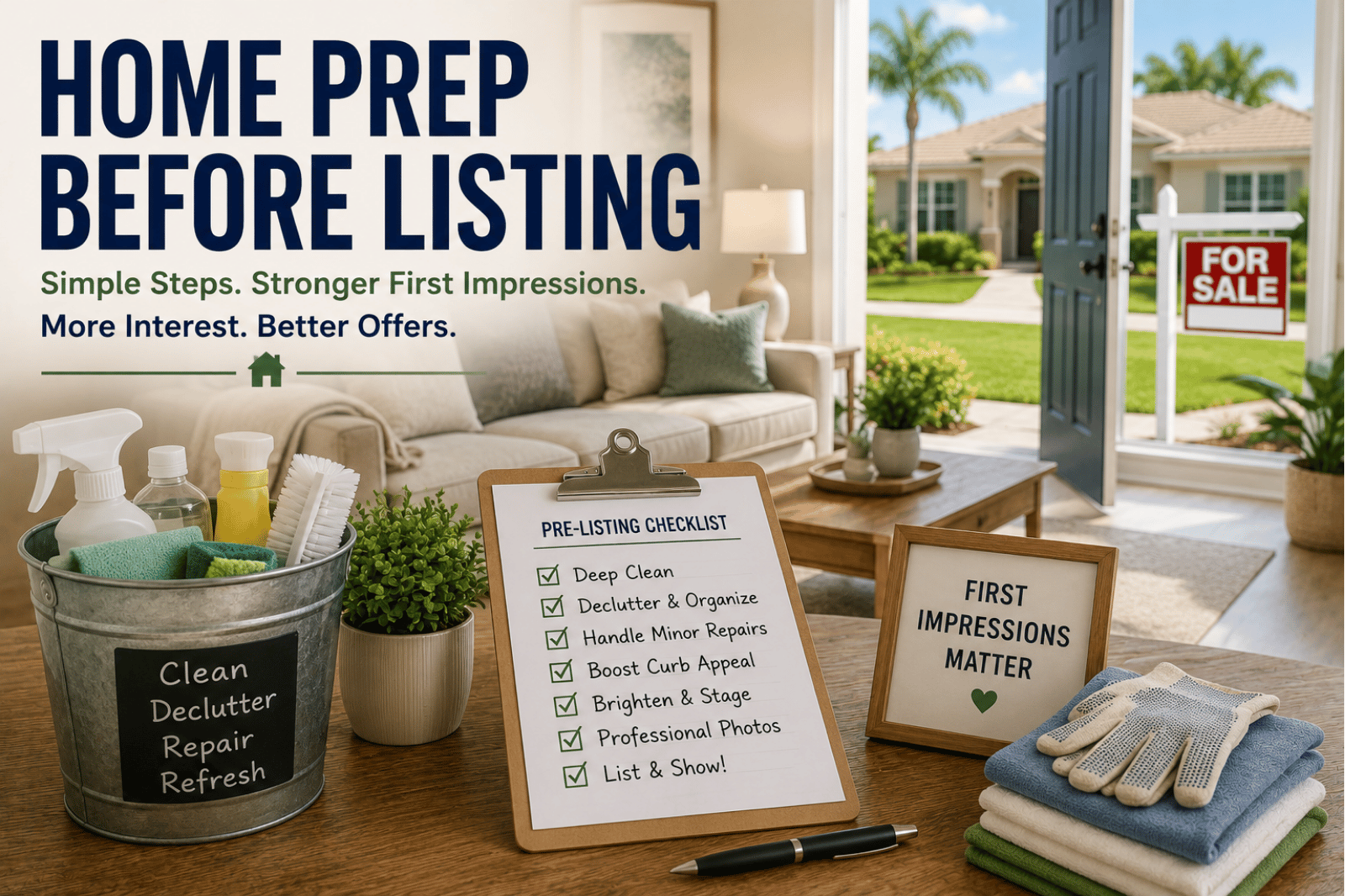
Home Prep Before Listing: What Florida Sellers Should Actually Do Before Putting a House on the Market
One of the first questions homeowners ask me is:
“What should I actually do before putting my house on the market?”
It’s a great question because preparing your home for sale can absolutely make a difference—but only if you’re spending your time and money in the right places.
I’ve worked with homeowners throughout New Port Richey, Trinity, Spring Hill, Hudson, Land O’ Lakes, and the surrounding areas, and I’ve seen people spend thousands of dollars on renovations that barely affected their final sale price. I’ve also seen a few simple improvements help homes sell faster and leave buyers with a much stronger first impression.
The biggest mistake isn’t failing to prepare a home.
It’s preparing it without a plan.
Every property is different. Your goals, timeline, budget, and the condition of your home all play a role in deciding what should—and shouldn’t—be done before listing.
Don’t Spend Money Until You Have a Plan
One of the first pieces of advice I give sellers is simple:
Don’t start remodeling before you understand what your home actually needs.
It’s easy to assume every house needs a new kitchen, updated bathrooms, or new flooring before it can sell. Sometimes that’s true.
Many times, it isn’t.
A home in Trinity may need a different strategy than a longtime family home in Spring Hill or an inherited property in Hudson. Buyer expectations, neighborhood values, and your price range all matter.
Instead of asking, “What should I upgrade?” I encourage sellers to ask:
“What improvements will help buyers feel confident about this home?”
That’s a much better place to start.
What Should I Do Before Listing My Home?
Before spending money on major projects, I almost always recommend focusing on the basics. They’re often the least expensive improvements and provide the biggest return.
Deep Clean the Entire House
A professionally cleaned home immediately creates a better first impression.
Buyers notice dirty floor boards, windows, dusty ceiling fans, stained grout, pet odors, and neglected bathrooms much more than most sellers realize. In Florida, heat and humidity can also make mildew and musty smells more noticeable.
A spotless home doesn’t make it newer.
It makes it feel well cared for.
Declutter Every Room
If you’ve lived in your home for years, you’ve naturally accumulated furniture, decorations, paperwork, storage bins, and keepsakes.
The goal isn’t to remove your personality.
It’s to help buyers focus on the home instead of your belongings.
Decluttering makes rooms feel larger, brighter, and easier for buyers to picture themselves living there.
Improve Your Curb Appeal
First impressions begin before buyers walk through the front door.
Simple improvements like trimming shrubs, refreshing mulch, pressure washing the driveway, cleaning gutters, and touching up the front door can dramatically improve how buyers view your home.
Fix the Small Things Buyers Notice
Not every repair needs to be completed before selling, but obvious maintenance issues shouldn’t be ignored.
Consider taking care of:
- Leaking faucets
- Loose handrails
- Burned-out light bulbs
- Cracked outlet covers
- Damaged drywall
- Peeling paint
- Broken screens
- Worn caulking
- Sticking doors
Each issue may seem small on its own, but together they influence how buyers perceive the entire property.
Should I Remodel Before Selling?
For most homeowners, the answer is:
Probably not.
Expensive kitchen remodels, luxury bathrooms, and high-end flooring don’t always add enough value to justify the cost.
Sometimes fresh paint, updated landscaping, or replacing worn carpet provides a much better return than a complete renovation.
Other times, the next owner plans to remodel anyway, making your investment unnecessary.
Every home is different, which is why I recommend making decisions based on your specific property instead of following a generic checklist.
Should I Get a Pre-Listing Inspection?
Not every seller needs one, but it can make sense in certain situations.
If your home is older, has deferred maintenance, or you’ve owned it for decades, a pre-listing inspection can identify issues before buyers discover them during the inspection period.
Knowing about potential concerns ahead of time gives you options.
You may decide to:
- Make repairs before listing
- Offer a buyer credit
- Price the home accordingly
- Sell the property as-is
The right choice depends on your goals.
Should I Sell My House As-Is Instead?
Many homeowners assume every house needs to be completely updated before it can sell.
That’s simply not true.
For inherited homes, estate properties, downsizing situations, or out-of-state owners, investing thousands of dollars into renovations isn’t always the best financial decision.
Sometimes selling the home as-is is the better option.
Other times, making a handful of strategic improvements results in a better outcome.
The key is understanding your options before you start writing checks.
Preparing to Sell Is Also an Emotional Process
This is something many home-selling articles overlook.
Selling a house isn’t always just a financial transaction.
I’ve worked with seniors downsizing after decades in the same home, adult children helping aging parents, families settling estates, and homeowners relocating after major life changes.
Preparing the house often means sorting through memories, making difficult decisions, and letting go of belongings collected over many years.
That process can be emotionally exhausting.
Starting the conversation early gives you more time to make thoughtful decisions instead of feeling rushed. It also gives you more options when deciding what to repair, what to leave alone, and which selling approach makes the most sense for your situation.
Frequently Asked Questions
What should I fix before selling my house?
Focus on obvious maintenance items that buyers will notice, such as leaking faucets, damaged drywall, peeling paint, broken fixtures, and burned-out light bulbs.
Should I paint my house before listing it?
If the paint is worn, damaged, or uses bold colors that may turn buyers away, fresh neutral paint is often a worthwhile investment. If it’s already in good condition, repainting may not be necessary.
Is it worth remodeling before selling?
Usually not. Many major renovations don’t return their full cost. Small improvements often provide a better return on investment.
How far in advance should I prepare my home for sale?
Starting several weeks—or even a few months—before listing gives you more time to make smart decisions without feeling pressured.
Should I clean my house before professional photos?
Absolutely. Today’s buyers almost always see your home online before scheduling a showing, so clean, organized rooms make a significant difference in how your home is presented.
Every Home Needs Its Own Plan
If there’s one thing I’ve learned, it’s that there is rarely only one right way to prepare a home for sale.
Some homes need repairs.
Some simply need a deep cleaning.
Some should be updated.
Others are better sold exactly as they are.
The best approach depends on your goals, your budget, your timeline, and the home itself.
That’s why I never hand every seller the same checklist. I start by understanding your situation and helping you create a plan that fits your needs—not someone else’s.
Starting early usually gives you more options, helps you avoid unnecessary expenses, and makes the entire selling process much less stressful.
Helpful Resources
Home Prep Before Listing – Learn more about getting your home ready to make the best first impression.
What Not to Fix When Selling a House – Discover which repairs are often unnecessary before listing.
Should You Replace Your Roof Before Selling? – Understand when a major repair makes financial sense.
My Home Selling Options Explained – Explore the different ways I help homeowners sell based on their goals and circumstances.